I sat through a lecture recently that fundamentally challenged how I’d always understood salvation. Not the comfortable, familiar formula I’d grown up reciting, but something far more demanding and immediate.
The speaker started with a simple observation: Jesus never taught that God needs blood to forgive sins. I’d heard this claim before, dismissed it as radical revisionism. But then came the evidence, straight from the gospels themselves.
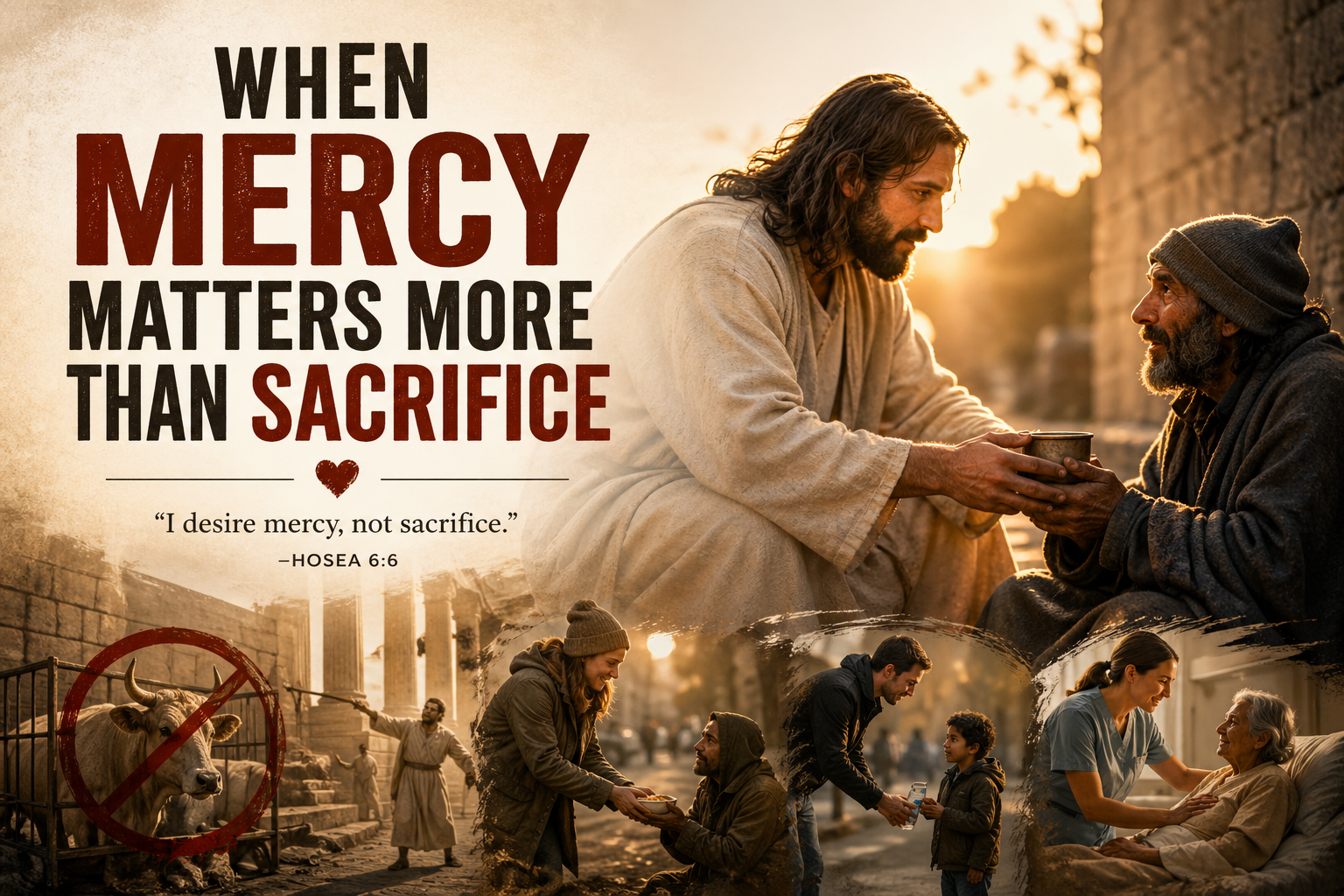
When Jesus cleansed the temple, he didn’t just flip tables. He drove out the animals, freed them from their cages. The entire sacrificial system, the blood economy of forgiveness, met its fiercest critic in the one many call the ultimate sacrifice. “I desire mercy, not sacrifice,” Jesus quoted from Hosea. Not as a suggestion. As doctrine.
The real shock came when we examined what Jesus actually said about eternal life. A rich young man once asked him directly: “What must I do to inherit eternal life?” Jesus didn’t mention belief systems or confessions of faith. His answer was blunt: “Keep the commandments.” Then he listed them. Don’t kill. Don’t steal. Don’t lie. Love your neighbor as yourself.
In another encounter, a scribe asked about the greatest commandment. Jesus gave him two that cannot be separated: Love God with everything you have—heart, soul, mind, strength. And love your neighbor as yourself. “On these two commandments,” Jesus said, “hang all the law and the prophets.”
This wasn’t metaphorical. This wasn’t spiritual abstraction.
The lecture then turned to that uncomfortable passage where Jesus describes the final judgment. Many will come saying “Lord, Lord,” claiming they prophesied in his name, performed miracles. His response chilled me: “Depart from me, you who practice evil.”
What evil? They failed to feed the hungry. They didn’t give water to the thirsty. They ignored the least vulnerable among them. Jesus equates this neglect with rejecting him personally: “When you did not do it to the least of these, you did not do it to me.”
I thought about Romans 10:9, that familiar verse about confessing Jesus as Lord and believing in resurrection for salvation. But Jesus himself warns that confession isn’t enough. Calling him “Lord” isn’t enough. Even performing miracles in his name isn’t enough.
What matters is mercy. What matters is love enacted, not just professed.
The implications hit hard. How many hungry people have I passed this week? How many thirsty? When did I last visit someone sick or imprisoned? These aren’t optional good deeds for extra credit. According to Jesus, these acts of mercy determine everything.
Repentance, in Jesus’s framework, isn’t a one-time transaction. It’s turning toward a life oriented around love—love of God expressed through love of neighbor. No blood required. No magic words. Just the difficult, daily work of caring for those who need care.
I left that lecture with my comfortable theology in ruins. The path Jesus describes demands more than belief. It demands transformation. It demands that I see every hungry person as an opportunity to serve him directly. Every act of mercy becomes an act of worship. Every neglect, a betrayal.
The speaker called this understanding of salvation heretical by modern church standards. Maybe so. But it comes straight from Jesus’s own words, unfiltered and uncompromising. The greatest commandments aren’t suggestions or ideals. They’re the entire framework for eternal life.
Love God completely. Love your neighbor as yourself. Feed the hungry. Give drink to the thirsty. Visit the sick and imprisoned. This is salvation according to Jesus. Not through blood sacrifice, not through verbal confession alone, but through lived mercy.
The challenge now is living it. Every day presents choices: mercy or indifference, love or neglect. Jesus made clear which choice leads to life. The question isn’t whether I believe this teaching. The question is whether I’ll obey it.