I’ve been digging into a question that keeps coming up in archaeological circles: which biblical figures can we actually prove existed through archaeology? After examining the evidence, I’ve come to some conclusions that might surprise you.
Let me start with what we don’t have. Despite centuries of excavation and research, we have no direct archaeological evidence for any named individual from Genesis through Judges. No Abraham, no Moses, no Joshua. This doesn’t mean these texts contain no historical memory whatsoever. Some tribal connections and social patterns reflected in books like Judges might preserve authentic ancient memories. But specific individuals? The archaeological record stays silent.
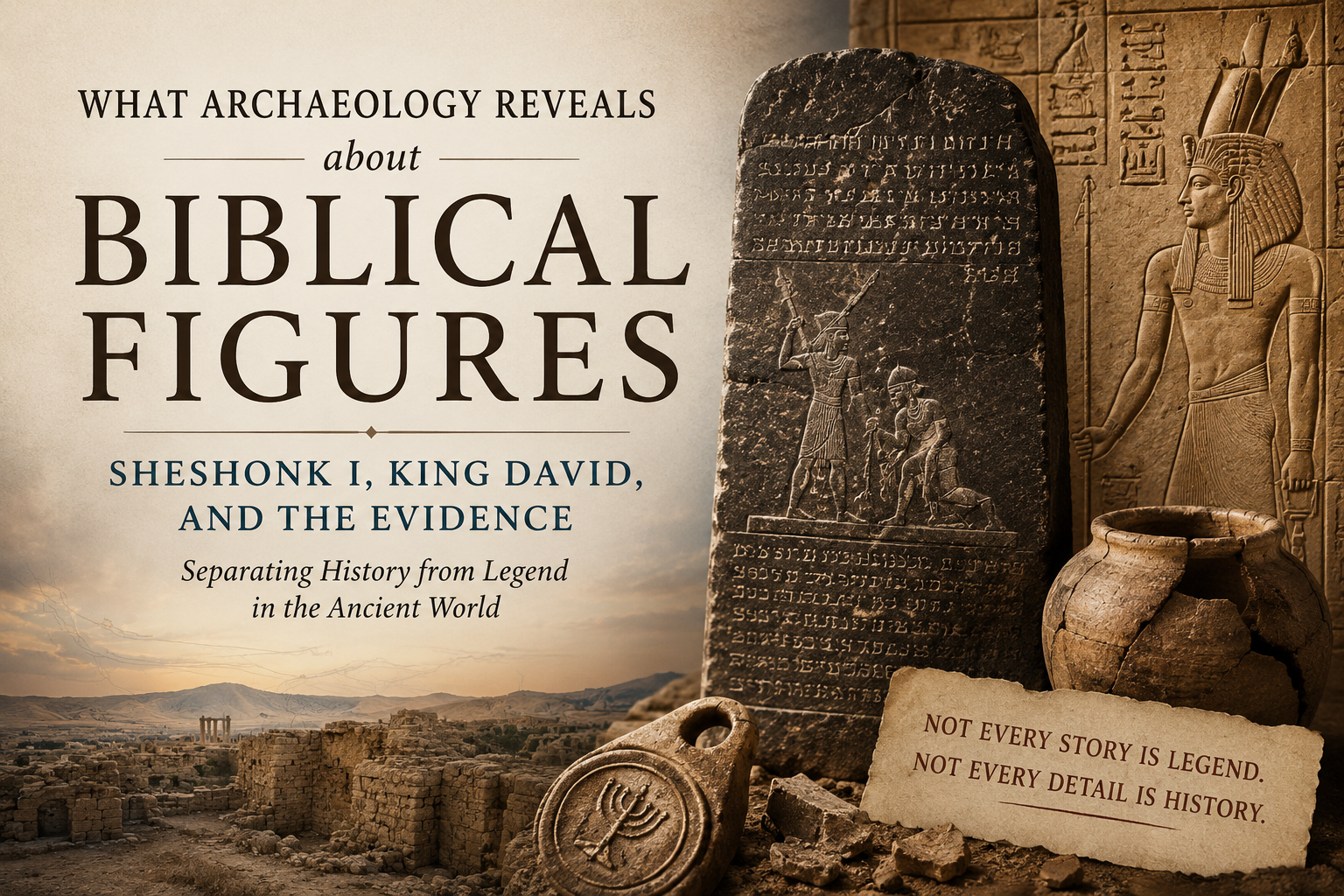
The first biblical figure with solid archaeological backing is Egyptian Pharaoh Sheshonk I, called “Shishak” in the Hebrew Bible. He shows up about seven times in biblical texts, particularly in 1 Kings and 2 Chronicles. What makes Sheshonk special is that we have Egyptian records and material evidence that match the biblical timeline perfectly. His military campaign through Israel and Judah around 925 BCE appears in both biblical and Egyptian sources. This convergence gives us our first firm archaeological confirmation of a biblical figure.
King David comes in as a close second, though the evidence works differently. We don’t have inscriptions from David’s own time or artifacts bearing his name from when he would have lived. What we do have is the Tel Dan Stele, carved about a century after David’s supposed lifetime. This stone monument, probably commissioned by an Aramean ruler, boasts about defeating Israelite kings and mentions a king “of the House of David.”
This phrase matters more than it might first appear. By the mid-9th century BCE, the Judahite dynasty was known by David’s name. Dynasties don’t name themselves after fictional characters. The existence of a “House of David” strongly suggests a real founder named David lived perhaps a century earlier. It’s indirect evidence, but it’s compelling.
Here’s where things get interesting and where many people stumble. Finding evidence that David existed doesn’t validate everything the Bible says about him. Most scholars who work with this material recognize a gap between “David existed” and “the biblical biography of David is historically accurate.” The Tel Dan Stele supports the idea of a historical figure who founded a dynasty. It doesn’t confirm he killed Goliath, wrote psalms, or had the specific adventures described in Samuel and Kings.
My own view, shaped by studying these materials, aligns with the scholarly consensus: a warlord or chieftain named David probably established what became the Judahite royal line. The stories about his life, however, were written and rewritten over centuries. Editors expanded, theologized, and shaped these narratives long after David’s death. The rough outlines might preserve historical memory, but the details underwent substantial literary development.
This distinction between existence and biography applies to many ancient figures, not just biblical ones. We know Alexander the Great existed, but many stories about him are clearly legendary. The same principle applies here. Archaeological evidence can confirm someone lived without confirming everything written about them.
Working with this material has taught me to appreciate different types of historical evidence. Direct archaeological confirmation, like we have for Sheshonk I, gives us the firmest ground. Indirect evidence, like the Tel Dan Stele’s reference to David’s dynasty, provides reasonable historical probability. And literary texts, while valuable, require careful analysis to separate historical kernels from later theological and literary development.
The search continues, of course. Every season brings new excavations and sometimes new inscriptions. But as things stand now, Sheshonk I holds the distinction of being the earliest biblical figure with direct archaeological support, while David follows closely with strong indirect evidence for his existence, if not his full biblical biography.
This evidence-based approach might disappoint those hoping archaeology would prove every biblical narrative. It might equally frustrate those hoping to dismiss the entire biblical account as fiction. The reality, as often happens, sits somewhere between these extremes. Some biblical figures clearly existed, others remain historically uncertain, and still others probably represent literary or theological constructions rather than historical individuals.
The archaeological record teaches us to read ancient texts with both respect and critical judgment. These documents preserve genuine historical memories alongside theological interpretation and literary artistry. Sorting out which is which remains one of the most fascinating challenges in studying the ancient world.