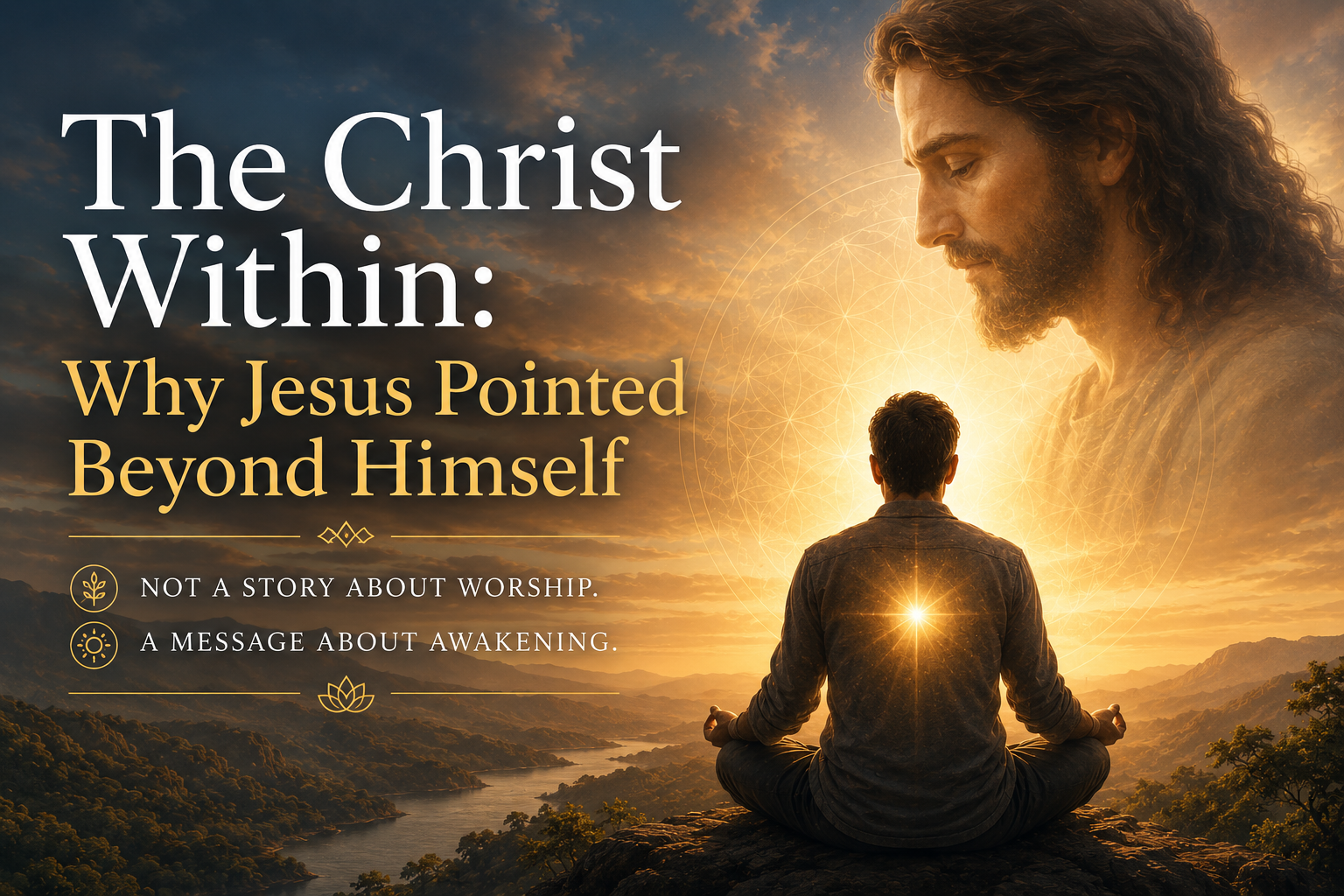
The first time I understood the difference between Jesus and Christ, everything changed. Not in some dramatic lightning-bolt moment, but in the quiet realization that what I’d been taught in Sunday school was only part of the story.
Jesus was a man. Yeshua, born in Galilee two thousand years ago. He walked, ate, slept, and lived among people. Christ represents something else entirely—the universal consciousness of God that animated Jesus and exists in all creation. This distinction matters because it transforms the entire message.
Growing up, I heard John 1:12 countless times: “To all who received him, to them he gave the power to become the sons of God.” Churches taught this meant accepting Jesus as savior. But sitting in meditation one morning, a different understanding emerged. Receiving “him” means receiving that same Christ consciousness Jesus embodied. Not belief in a historical figure, but awakening to the divine intelligence already present within.
When Jesus said “I am the way,” he wasn’t setting himself up as the sole gatekeeper to heaven. He was showing us a state of consciousness we can all access. Think about it—if salvation required belief in one specific person from one specific time period, what happened to everyone who lived before Jesus? Or those who never heard his name?
The more I explored these ideas through meditation and study, the clearer it became why religious institutions reshaped this message. A person who directly experiences their connection to the divine doesn’t need intermediaries. They don’t need someone telling them what to believe or how to interpret sacred texts. They know the kingdom of God exists within them because they’ve touched it themselves.
For two thousand years, we’ve been sold a different story. Believe the right things. Follow the rules. Perform the rituals. Donate to the church. Wait for salvation. This system works brilliantly for maintaining institutional power. It doesn’t work so well for spiritual awakening.
The mystic Yogananda offered a perspective that resonated deeply with my own experience. The “second coming” isn’t about Jesus descending from clouds. It’s Christ consciousness awakening in individual hearts. Each person who realizes this divine intelligence within themselves participates in that return.
This understanding transforms everything. Prayer becomes less about petitioning an external deity and more about connecting with the divine presence within. Scripture becomes less about historical events and more about universal truths expressed through particular stories. Faith becomes less about what you believe and more about what you directly experience.
The real message—what some call the actual “good news”—is both simpler and more radical than what most churches teach. You’re not separate from God. You’re not broken or fundamentally flawed. The same divine intelligence that lived through Jesus lives in you right now. Not metaphorically. Not potentially. Actually.
This doesn’t diminish Jesus. It honors what he actually taught. He didn’t come to be worshipped. He came to show us what’s possible when a human being fully realizes their divine nature. “Greater works than these shall you do,” he said. Not “worship me and wait for heaven.” Not “follow these rules and hope for the best.” But “you will do greater works.”
Meditation became my primary practice for exploring this. Not the kind where you empty your mind, but the kind where you turn attention inward to discover what’s already there. In those quiet moments, beyond thought and emotion, something else emerges. Call it presence, awareness, consciousness—words fail to capture it fully. But once you touch it, you understand what Jesus pointed toward.
The institutions that claim to represent Jesus’s teachings have buried this understanding under layers of doctrine and dogma. They’ve turned a teaching about awakening into a system of control. They’ve replaced direct experience with secondhand belief. They’ve made the simple complicated and the accessible distant.
None of this requires rejecting the wisdom in religious traditions. Many contain profound truths. But those truths point beyond the institutions themselves to something each person must discover independently. No priest, pastor, or pope can do this work for you. No amount of correct belief substitutes for direct realization.
The path Jesus demonstrated remains available. Not through him as an intermediary, but through the same practices he used—meditation, contemplation, and turning attention inward to discover the divine intelligence that animates all life. This intelligence doesn’t belong to any religion. It predates all religions and will outlast them all.
Every person who awakens to this consciousness within themselves proves Jesus’s teaching worked. Not the distorted version that makes him the exclusive path to God, but the original message that we all carry divine potential waiting to be realized. The kingdom of heaven isn’t a distant place you might reach after death. It’s a state of consciousness available right now.
This shift in understanding changes how you move through the world. Problems that once seemed insurmountable become workable. Fears that once paralyzed lose their grip. The need for external validation fades as internal knowing grows stronger. You stop looking outside for what can only be found within.
The religious establishment won’t teach you this. It undermines their entire structure. A person who knows their divine nature doesn’t need someone else interpreting God for them. They don’t need threats of hell or promises of heaven to behave ethically. They act from love because they recognize the divine in themselves and others.
This is the real second coming—not a future event but a present possibility. Each person who awakens Christ consciousness within themselves participates in this return. Not through belief but through direct realization. Not by following rules but by discovering the divine intelligence that transcends all rules.
The same presence that lived through Jesus lives in you. The question isn’t whether this is true—it’s whether you’ll do the inner work to discover it for yourself.