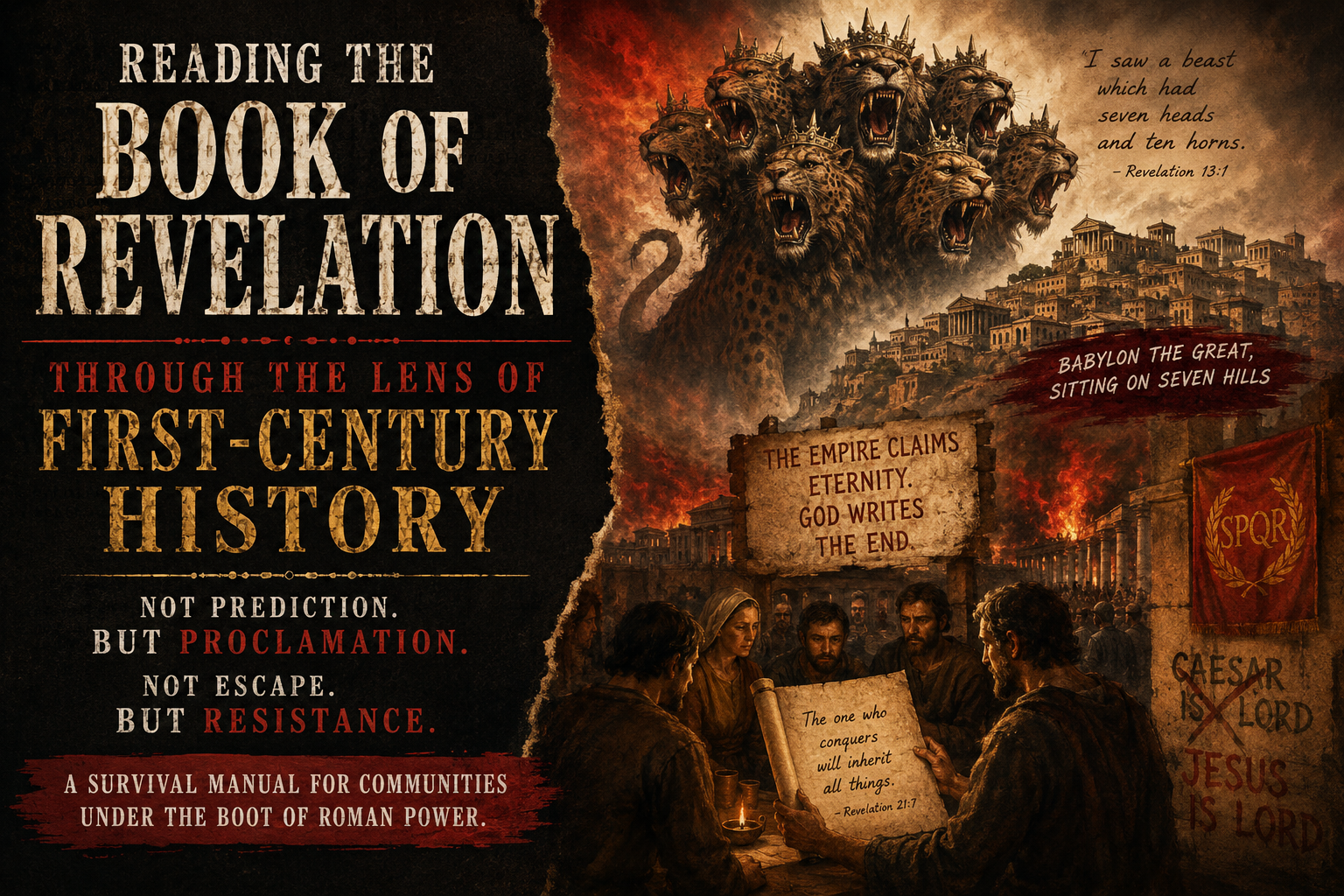
Reading the Book of Revelation through the lens of first-century history transforms everything about how we understand this text. When you strip away centuries of speculation about end times and future prophecies, what emerges is something far more immediate and visceral: a survival manual for communities under the boot of Roman power.
The book’s wild imagery—beasts rising from the sea, stars falling from heaven, rivers turning to blood—wasn’t meant to be decoded by people two thousand years later. These symbols spoke directly to readers who knew exactly what the author meant when he described a beast with seven heads. They lived in the shadow of Rome’s seven hills. They understood the coded language because they needed it. Writing openly about resisting imperial power could get you killed.
The Power of Grotesque Imagery
The author of Revelation knew what he was doing when he filled his text with bizarre and horrifying visions. This wasn’t random weirdness or mystical confusion. Every dragon, every plague, every trumpet blast served a specific purpose: grab attention, stir emotion, and encode contemporary events in symbols that insiders would recognize but authorities might overlook.
Think about it from the perspective of a small Christian community in Asia Minor around 95 CE. You’re meeting in someone’s home, keeping a low profile. Roman officials view your refusal to participate in emperor worship as seditious. Your neighbors think you’re antisocial at best, treasonous at worst. Some of your friends have already faced imprisonment or worse.
Into this atmosphere comes this letter—technically an apocalypse, a revealing—that pulls back the curtain on what’s really happening. The Roman Empire presents itself as eternal, divinely ordained, bringing peace and prosperity. But Revelation shows Rome as a beast, drunk on the blood of saints, a prostitute sitting on seven hills, dealing in human souls as cargo.
Not Prediction but Proclamation
The text functions as resistance literature, not fortune-telling. When Revelation describes the fall of Babylon (a transparent code for Rome), it’s not predicting some far-future event. It’s declaring to its readers that the empire oppressing them will fall, just as every empire before it has fallen. God, not Caesar, controls history’s arc.
This reading makes sense of passages that otherwise seem incomprehensible or arbitrarily violent. The revenge fantasy elements—and they are revenge fantasies—serve a crucial psychological function for powerless people. When you can’t fight back physically, when you’re outnumbered and outgunned, imagining divine retribution provides emotional release and maintains group cohesion.
The comfort Revelation offered wasn’t abstract theological hope. It was concrete assurance that their current suffering had cosmic significance. Every act of faithfulness, every refusal to compromise, every moment of endurance was witnessed and would be vindicated. The empire might kill their bodies, but it couldn’t touch what really mattered.
Reading Revelation in Its World
Understanding Revelation as a first-century document doesn’t diminish its power—it enhances it. We see how marginalized communities have always found ways to speak truth to power, even when direct speech means death. We recognize the human need to believe that injustice won’t have the final word.
The symbolic language that seems so mysterious to us would have been immediately meaningful to its original audience. The number 666, the mark of the beast, the great whore of Babylon—these weren’t puzzles to solve but rallying cries to recognize. They knew their enemy, and Revelation gave them a vocabulary to name it.
When we insist on reading Revelation as a roadmap for current events, we miss its actual achievement. The author created a work of staggering imagination that helped a persecuted minority maintain their identity and hope against overwhelming odds. He took the apocalyptic genre—already established in Jewish literature—and crafted something that spoke to the specific crisis facing Jesus followers under Roman rule.
The Cost of Misreading
Every generation wants to be the one living in the end times. Every crisis becomes a sign, every enemy becomes the antichrist. But forcing Revelation into a predictive framework about our present strips it of its historical power and literary sophistication. We end up with a text divorced from its context, twisted to serve whatever contemporary anxiety we’re facing.
The original readers didn’t need Revelation to tell them about some distant future. They needed it to help them survive their present. They needed to know that Rome’s power was an illusion, that their faithful endurance mattered, that the blood of martyrs cried out for justice and would be answered.
Reading Revelation historically doesn’t make it less relevant. If anything, it shows us how religious communities have always struggled against oppressive powers, how they’ve used symbol and story to maintain hope when hope seems impossible. The book stands as testimony to the human capacity to imagine alternative futures even when the present appears fixed and eternal.
Revelation remains a great book precisely because it accomplished what it set out to do: strengthen a vulnerable community’s resolve, encode resistance in unforgettable images, and insist that earthly power never gets the last word. That message needed no prophetic foresight. It needed only a clear eye about how empires work and an unshakeable conviction that they all, eventually, fall.