I spent years wrestling with questions that felt too big for the frameworks I’d been given. The disconnect between who I knew myself to be and what the world told me I should be created a tension that no amount of rule-following could resolve. It wasn’t until I encountered certain spiritual texts outside the mainstream canon that things started clicking into place.
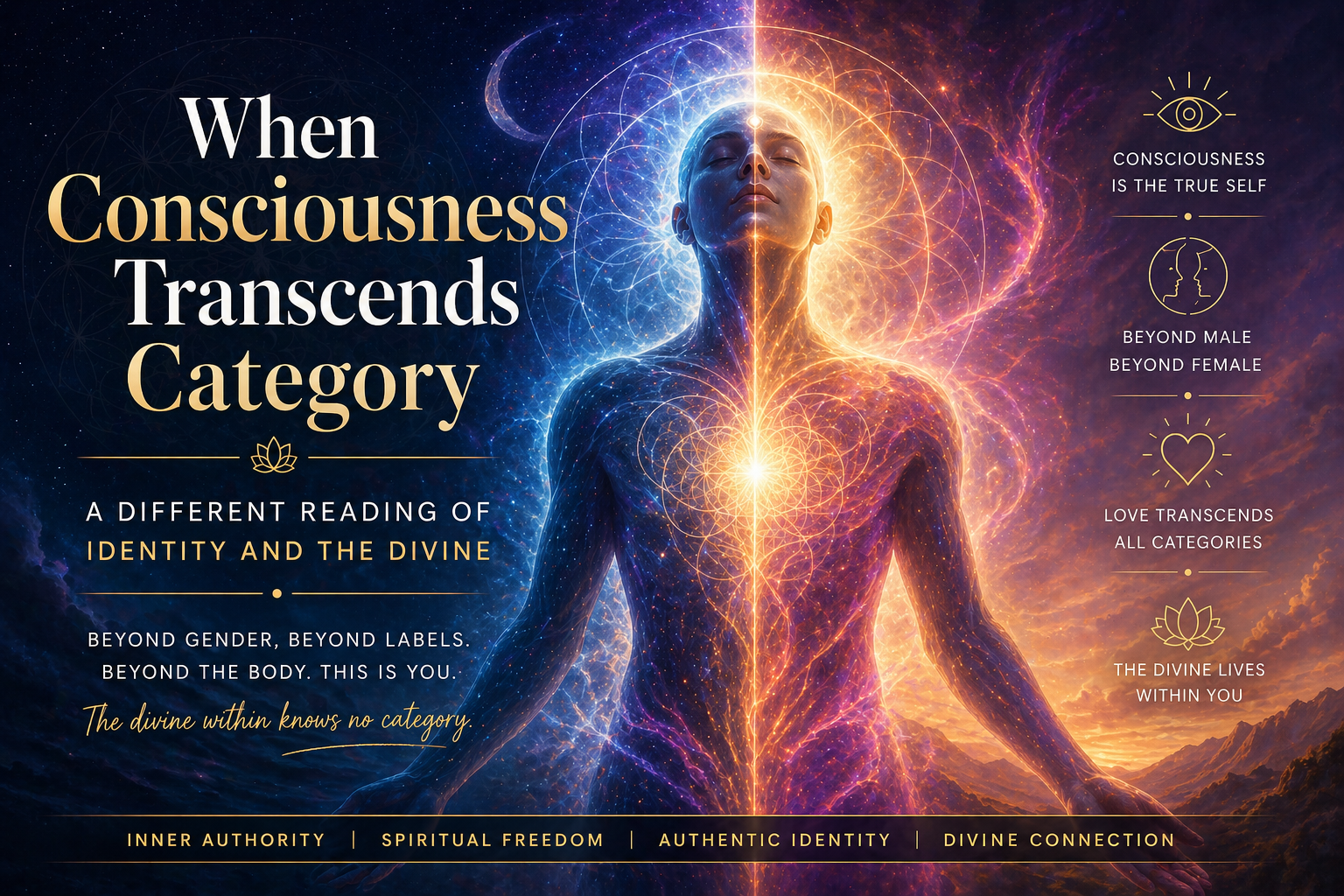
The breakthrough came when I understood a fundamental distinction: gender belongs to the body, but identity belongs to consciousness. We are spiritual beings having a temporary physical experience, not the other way around. This isn’t some new-age platitude; it’s woven throughout mystical traditions if you know where to look.
Take the teaching about the kingdom of heaven being within. Most interpret this as some vague spiritual sentiment, but I’ve come to understand it differently. It points directly to consciousness itself as the seat of the divine. Not the body with its chromosomes and hormones, not the social roles we’re assigned, but the aware presence reading these words right now. That awareness existed before this body formed and will continue after it returns to dust.
The Gospel of Thomas offers another angle on this. There’s a passage about making the male and female into a single one. Traditional readers often skip over this or treat it as incomprehensible mysticism. But sit with it. What if this points to integrating and transcending the dualities we get trapped in? Not erasing difference, but recognizing something more fundamental than the categories themselves.
This understanding changed everything about how I relate to gender and identity. The body I inhabit has certain characteristics. Society has opinions about what those characteristics mean. But neither the body nor society gets the final word on who I am at the deepest level. That essence, that conscious presence, exists beyond male or female labels.
The implications extend to love as well. If consciousness is primary and bodies are temporary vessels, then love between souls transcends whatever configuration of bodies those souls happen to occupy. Love itself becomes a divine expression rather than something to be regulated according to biological categories.
I realize this cuts against centuries of institutional teaching. Religious authorities have long positioned themselves as the arbiters of identity, telling us who we are, who we can love, how we should express ourselves. But what if the real authority lies within? What if the divine spark in each person is more qualified to determine their path than any external doctrine?
This doesn’t mean throwing out all structure or guidance. Bodies are real, social contexts matter, and we need practical ways to navigate the world. But it does mean recognizing that these external realities don’t define our ultimate nature. A person who feels misaligned with their assigned gender isn’t broken or confused; they might simply be more attuned to their essence than to their packaging.
The texts that opened these doors for me exist at the margins of religious tradition. The Gospel of Thomas didn’t make it into the official canon. Mystical interpretations of familiar teachings get sidelined in favor of literal readings. There’s a reason for this: when people connect directly with their inner divine nature, they become less dependent on institutional mediation.
I’ve watched this understanding transform people’s relationships with themselves. The person convinced they were fundamentally wrong for not fitting gender expectations discovers they were never the problem. The one torn between authentic love and religious condemnation realizes both can coexist when consciousness takes priority over categories. The seeker exhausted from trying to earn divine approval understands they already carry divinity within.
This shift from external to internal authority isn’t comfortable. It requires taking responsibility for your own spiritual development rather than outsourcing it to institutions. It means sitting with uncertainty instead of accepting pre-packaged answers. It demands distinguishing between what serves genuine spiritual growth and what merely maintains social control.
The body you’re in right now has a gender, or perhaps exists somewhere between or beyond traditional gender markers. Your family, community, and religious tradition probably have strong opinions about what that means. But underneath all of that, there’s a consciousness that transcends every label and category. That consciousness is where your true identity lives.
When spiritual teachings speak of transcending duality, they’re pointing toward this recognition. Not bypassing the human experience, but understanding it from a deeper vantage point. The integration of masculine and feminine principles happens not through external conformity but through internal recognition of wholeness.
This perspective validates experiences that traditional frameworks often pathologize. The person who knows their inner truth differs from their bodily assignment isn’t delusional; they’re experiencing the distinction between essence and form. The love that doesn’t fit approved categories isn’t sinful; it’s soul recognition that transcends physical configuration.
None of this negates the real challenges of living in bodies, in societies, with all their complexities and constraints. But it does relocate the source of authority from external institutions to inner knowing. It suggests that the divine essence within each person is more trustworthy than any rulebook about who they should be or whom they should love.
The question becomes: will you trust the consciousness that you are, or will you subordinate it to external categories? Will you recognize the divine within yourself and others, or will you insist that institutional interpretations supersede direct experience?
For me, the answer became clear through lived experience rather than theoretical debate. The frameworks that insisted I was wrong for existing as I do lost their power when I recognized they were commenting on my vehicle, not my essence. The love I was told was impossible revealed itself as the most genuine expression of soul recognition I’d known.
This isn’t about discarding all tradition or structure. It’s about recognizing where ultimate authority resides. The consciousness reading these words right now, regardless of the body it temporarily inhabits, carries a divine spark that predates and transcends every human category. That recognition changes everything about how we understand identity, love, and the nature of the spiritual journey itself.