I grew up in church. Sunday school, youth group, Bible camp—the whole nine yards. For years, I accepted what I was taught without really examining the foundation. Then one day, sitting in a sermon, something clicked that made me uncomfortable.
The pastor was explaining how we understand salvation, the church, and our relationship with God. Every point traced back to Paul’s letters. Not Jesus’s words in the Gospels. Not the teachings of Peter or John. Paul. Always Paul.
This got me thinking about something that had never occurred to me before. If Jesus came to save humanity, why do we need someone else to explain what he meant? Why do the red letters in my Bible seem insufficient on their own?
The Paul Problem
Here’s what most Christians believe, whether they realize it or not: without Paul’s epistles, we wouldn’t understand the gospel. The body of Christ as a theological concept? That’s Paul. Justification by faith alone? Paul. The full meaning of the cross? Paul again. Even basic concepts like how we’re saved today come primarily from his letters.
Think about that for a second. Jesus spent three years with twelve handpicked disciples. He taught them daily, performed miracles in front of them, and after his resurrection, spent forty days preparing them to spread his message. Yet apparently, none of that was enough. According to mainstream Christianity, God needed to recruit Christianity’s biggest enemy—a man who never met Jesus during his ministry—to explain what salvation really means.
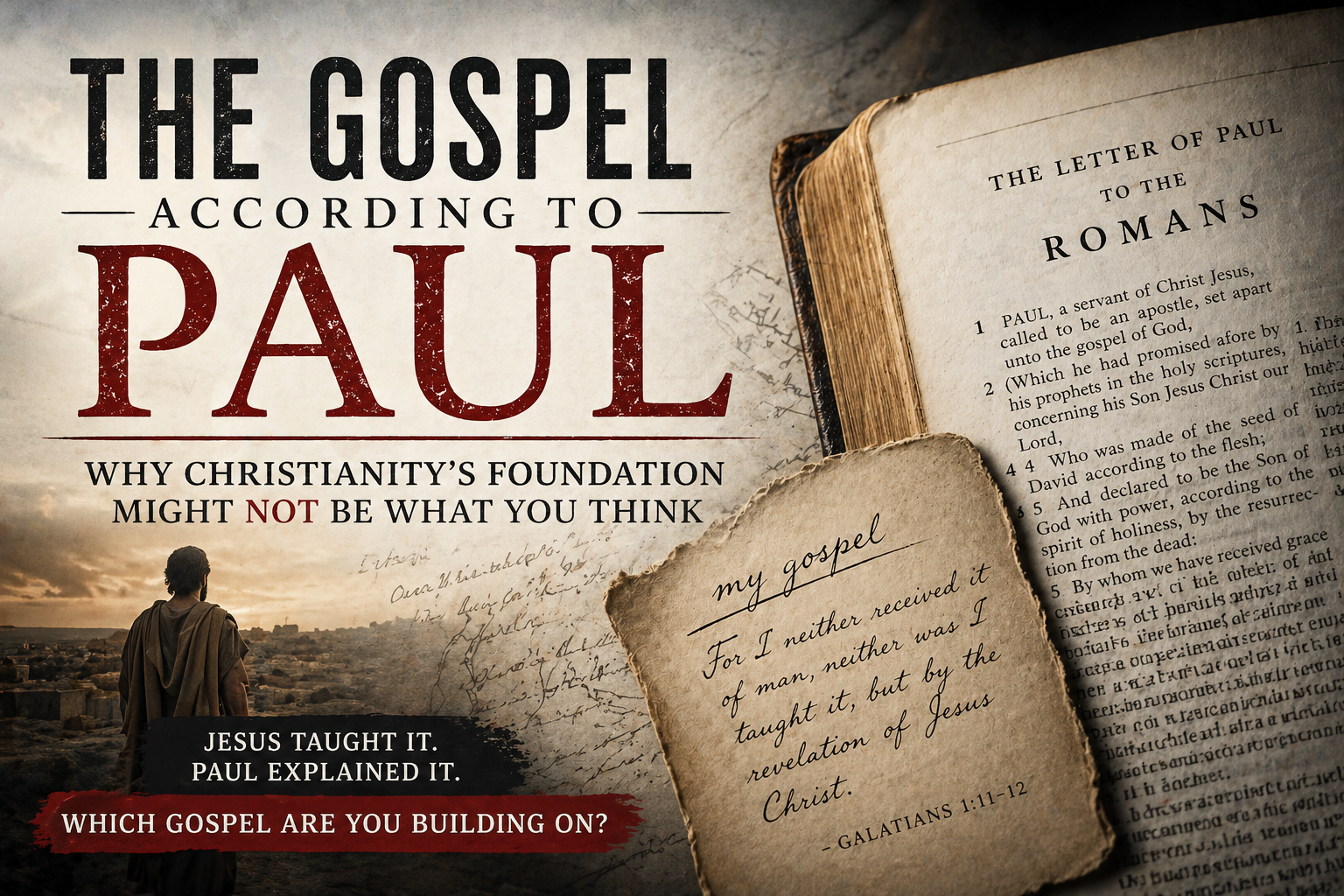
The more I dug into this, the stranger it became. Paul himself calls it “my gospel” multiple times. Not Jesus’s gospel. His gospel. He claims he received it through special revelation, not from the other apostles. In Galatians, he even boasts about confronting Peter, one of Jesus’s closest disciples.
What Did Jesus Actually Say?
So I went back to the Gospels with fresh eyes. What did Jesus say when asked directly about eternal life?
A lawyer once tested Jesus with this exact question. Jesus’s response was straightforward: love God with all your heart, soul, and mind, and love your neighbor as yourself. That’s it. No mention of a future apostle who would explain everything properly. No caveat that this was temporary teaching until Paul arrived.
When a rich young ruler asked the same question, Jesus told him to keep the commandments and follow him. Again, simple and direct.
Jesus trained his disciples to spread a specific message. In Matthew 28, he commissioned them to teach others to observe everything he had commanded them. Not everything Paul would later reveal. Everything Jesus had already taught.
The Uncomfortable Implication
This creates an awkward situation for traditional Christianity. Either Jesus successfully communicated the path to salvation to his disciples, or he didn’t. If he did, then Paul’s “mystery gospel” seems unnecessary. If he didn’t, then we’re saying the Son of God failed at his primary mission and needed a backup plan.
I remember the mental gymnastics I used to do to reconcile this. Dispensationalism was the answer I was given—the idea that God deals with humanity differently in different time periods. The disciples got one message for their time, Paul got another for ours. But this explanation always felt like retrofitting theology to solve an obvious problem.
A Different Reading
What if we took Jesus at his word? What if when he said “love God and love your neighbor,” he meant that was the actual path to eternal life? Not a metaphor, not a temporary teaching, but the genuine article?
This doesn’t require complex theological frameworks or special revelations to former persecutors. It doesn’t demand that we view Jesus’s original ministry as somehow incomplete or his disciples as confused about the basics of salvation even after Pentecost.
The early Jerusalem church, led by James and the original apostles, seemed to understand Christianity quite differently than how Paul presented it to the Gentiles. They continued attending the temple, following Jewish law, and viewing Jesus’s teachings through the lens of Jewish renewal rather than replacement.
Where This Leaves Us
I’m not saying Paul was wrong or that his letters have no value. But I am questioning why we’ve elevated his interpretation above the direct words of Jesus. Why do we need an intermediary to explain what the Son of God meant? Why is the gospel according to Paul treated as more authoritative than the gospel according to Jesus?
These aren’t comfortable questions. They challenge two thousand years of Christian tradition. But if we believe truth matters, if we believe Jesus knew what he was talking about, then we owe it to ourselves to at least consider that maybe, just maybe, he said what he meant and meant what he said.
The next time you’re in church and hear another sermon built entirely on Pauline theology, ask yourself: what would Christianity look like if we started with Jesus’s words and worked outward from there, instead of the other way around?